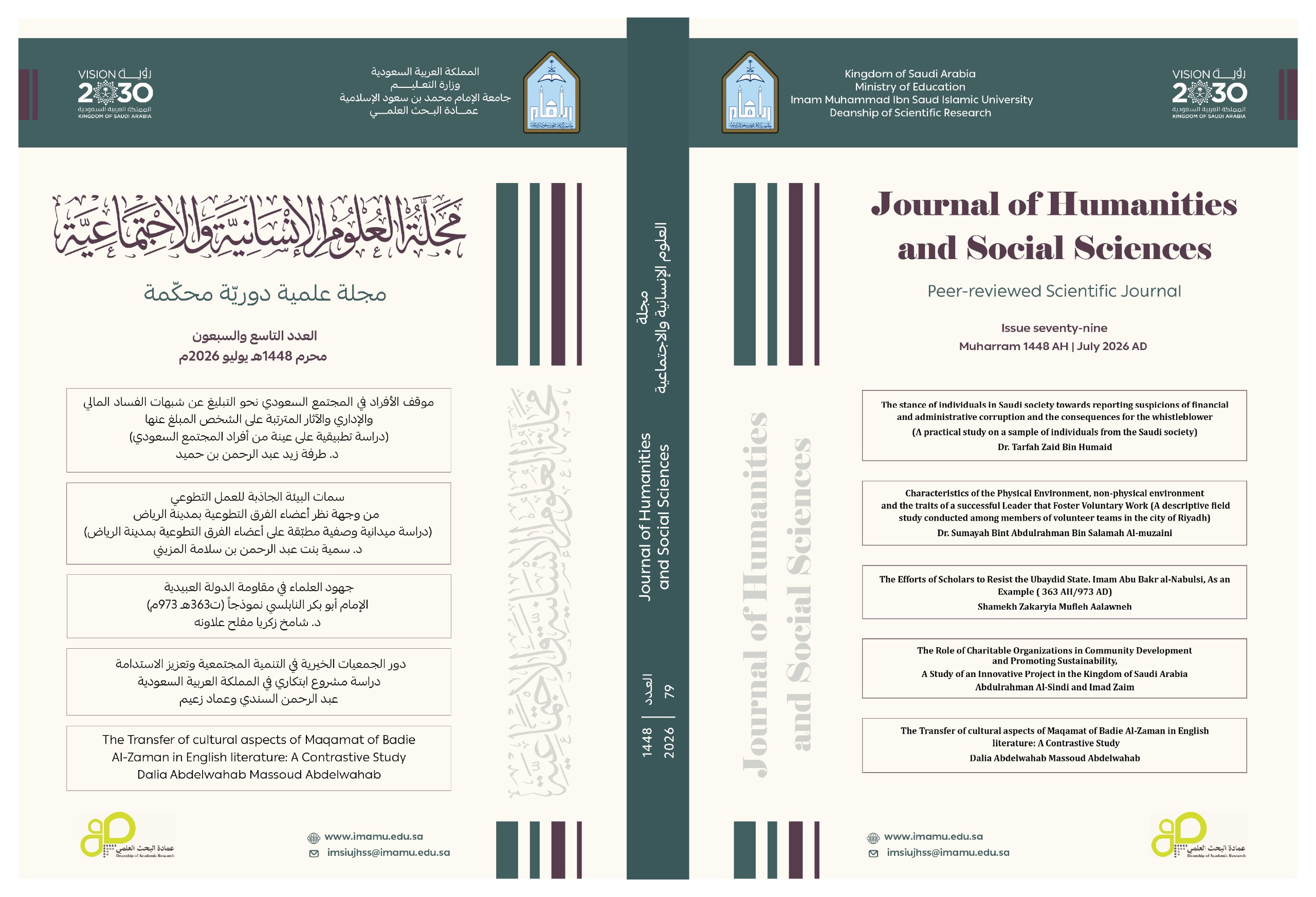

The Characteristics of A Conducive Volunteering Environment from Volunteer Teams' Perspective in Riyadh. A Descriptive Field Study Applied to Members of volunteer teams in Riyadh.
Main Article Content
Keywords
.Characteristics, Conducive Environment, Volunteering
Abstract
The current study was conducted to identify the characteristics of both physical and non-physical environments that foster voluntary work, as well as the traits of a successful volunteer team's leader. It employed a comprehensive social survey methodology, utilizing a questionnaire as the primary tool for data collection. The survey was administered to members of volunteer teams in Riyadh, with a total of 504 respondents participating. The study reached several key findings, including: there was a high level of agreement on the overall dimension concerning the characteristics of the physical alongside the non-physical environment beside the traits of a successful leader which will contribute to encourage volunteering, from the perspective of volunteer team members in Riyadh. Furthermore, the study found statistically significant differences between the average scores of the sample members concerning the dimension of the physical environment's characteristics that foster volunteering at the 0.01 level, and the dimension of the non-physical environment's characteristics that foster volunteering at the 0.05 level. These differences are attributed to the gender variable, favoring females. Additionally, there were statistically significant differences at the 0.05 level regarding the dimension of the physical environment's characteristics that foster volunteering, attributed to the variable of years of experience, favoring the group with less than one year of experience.